
Plastic pollution is a major world-wide problem, as is plastic recycling. Not just the UK, this article alludes to a number of other countries as many governments cannot be trusted when it comes to plastic recycling. However, let’s take the case of the UK, where its citizens have been lied to:
Not just to avoid getting fined for trashing or neglect, indeed, most people want to play their dutiful, responsible part in keeping the country environmentally friendly. That’s why most people follow the correct bin colors or recycling codes when it comes to emptying their waste. -Be it with the dumping of paper, cardboard, plastic, glass, metals, old electronics, garden weeds or general waste…
Whether it’s a weekly or other periodic timely ritual, a number of people, with their categorized, sorted out waste at hand, ready to be disposed of, go, for example, to supermarket car parks, where the different disposal bins are awaiting them to do the appropriate dumping. Some treat it like as if they are on an environmental pilgrimage!
However, when it comes to the UK, most of its citizens have no idea of what’s really going on when it comes to the handling of the plastic waste after they had taken the trouble to appropriately dump these items for recycling: They had washed their plastic yogurt pots, rinsed out the remnants of other foods that the different containers once held, separated the metal bottle tops, even removed the paper labels and flattened some containers…
If you have been trusting the recycling system, then it may come as quite a shock as it did to the author at the time of finding out, that most of the plastic is NOT recycled.
—In fact, it has been reported that only about 9% of the plastic waste is actually recycled.
Yes, that’s about 91% of the plastic that you took the trouble to send for recycling will not be recycled. It will probably get incinerated, or shipped off to another country possible thousands of miles away, where it will be put into landfills.
Some of the waste plastic is dumped into the sea, hence the reason why there have been a number of angry protestors protesting about this plastic getting washed up on the shores. -Think of the untold damage that this waste plastic could cause to marine life.
China completely stopped importing plastic recycling from the UK. However, it has been said that other countries such as Turkey or Malaysia still do it.
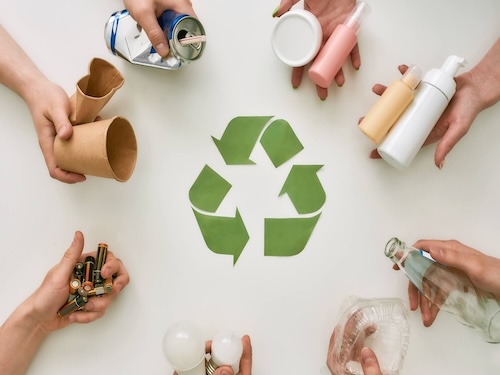
An unavoidable question: Why do so many people think that most of their plastic will be recycled? Here’s a clue. That recycling symbol (see above photo) by which many a UK’er is oh so familiar with, doesn’t imply product recycling.
A genuine recycling symbol was brought into existence in the 1970’s, signifying that a product attributed with this logo could be recycled. However, in 1988, the plastic manufacturing industry came up with a slightly different recycling logo, implying that plastic given this symbol does not imply recyclable.
-This different plastic triangular logo with its 7 sub-variant symbols is called the “resin identification code (RIC).” It serves to distinguish one resin type plastic from another.
It gives the illusion to the public that it’s all to do with complete plastic recycling, but deceptively, that’s not the case.
You see, the related industry involved knows that plastic recycling doesn’t work. Recycled plastic is not the same as the original form: It degrades when recycled. Further, it costs more to recycle, making it an inviable market industry.
For the manufacturers, here’s the rub.
If the public were aware en masse that plastic recycling was not workable then they would protest with outrage and assert that plastic recycling should be banned, the only real solution. But the plastic manufacturers and the government who are in on this as well would lose billions in profits and revenue from the ban.
An admission by former industry president of the Society of Plastics, Larry Thomas, spelt out the charade that still goes on to this day in the UK. In order to get round the problem he said that there has been a concerted effort to get public belief without question that the plastic recycling is working well.
-This playbook allows the recycling lie and cover-up to go by unabated. Yes folks, you’ve been played.
Now, here’s where it gets even stranger.
Glass or aluminum, for examples, can be recycled over and over, but because of the polymeric nature of plastic, when melted, the chains come apart and break down. This material becomes contaminated; more brittle than the original. The next melt-down and recycle, it gets even worse as it becomes practically useless…
Some of the recycled plastic becomes down-cycled. Instead of getting used, for example, in making another bottle, this material is processed for other functions. It can be used as packing material for stuffing cushions, or as carpet fibers… Well, it’s better than getting dumped as landfill, but eventually this will happen.
Harsh economic reality
The harsh economic reality is simple. This situation, this great big charade, will be very difficult to oppose and change, as the plastic manufacturers in cahoots with Big Government want to maintain the status quo.
—Newly manufactured plastic is a lot cheaper than recycled plastic. That’s because newly manufactured plastic comes from the by-products of gas and oil extraction. Natural gas that comes from drilling also gives off ethane. Ethane is a welcomed cheap, natural by-product, the component that gives rise to the manufacture of new plastic.
The absurd fact that Big Government provides billions in subsidies to fossil fuel corporations, makes plastic manufacturing even cheaper. In other words, once again it’s another case of where money is stronger than truth.
Finally and summary
In the UK, Plastic recycling is a lie. The lie has been given to you by Big Government and plastic manufacturers.
Citizens have been misled. They think that the plastic they have put out in the appropriate bins will be recycled. They don’t realize that only about 9% of this plastic is actually recycled.
The plastic problem, instead of getting addressed, is mostly shipped thousands of miles away and becomes someone else’s problem. It goes into a landfill in some far-off country such was Romania, Turkey, Indonesia, India… the list goes on.
Note that in 1998 China said no to importing this waste plastic. Shouldn’t other countries have the integrity to also say to importing?
The successfully production of recycled plastic has problems, this plastic is not recycled because it’s far, far cheaper to manufacture newly than recycle, but, it must not be forgotten that there is a world-wide plastic pollution problem.
There have been many cases of illegal plastic dumping. For examples, dumping into seas, finding its way into rivers, fields or burnt using against the law facilities. -All this is going on and most people in the UK have no idea that it’s happening. No doubt this quietly going on in other countries.
The UK public are under close monitoring or supervision to check that they’re doing their recycling properly with the threat of fines if they are not. -What a charade. What a farce!
This close monitoring takes the focus of attention away from the plastic manufacturers and Big Government, the ones who should really be monitored, held accountable. Whether it’s the UK or any other country involved in this scandal, citizens should demand that packaging material that’s not able to be recycled must be outrightly banned. Another material should be used instead.
Keeping the pressure on, further, fossil fuel subsidies should not be allowed to facilitate the manufacturer with the production of new cheaper plastic packaging products: It should also be mandatory for corporations to be responsible for the appropriate disposal of their plastic products.
-The current situation spells world-wide ecological disaster. Its lifeforms, including humans, are facing more pollution and rising ill-health because of plastic recycling and plastic pollution.